Who knew that scrolling through Tik Tok would introduce my brother and I to our new favourite treat. These cheap and super easy cookies are absolutely delicious, so of course I’ve already made these multiple times in the past few weeks in isolation.
The ingredients used are:
1 cup of peanut butter (smooth)
1 cup of brown sugar
1 x egg
1 tsp of baking soda
0.5 cup of choc chips
The method only consists of four easy steps:
1) preheat oven to 180 degrees fan forced
2) Combine all ingredients
3) Roll mixture into even balls and flatten with spoon or fingers (ensure hands are washed – gotta stay hygienic)
4) Bake for 10 minutes and wait for them to cool
Pricing:
I’m pretty easy with what brands I like to use. Any brand is fine as long as it works the same and is affordable.
For this particular tutorial I used a regular brand of peanut butter but instead of getting the smaller jar, I purchased a 750g jar for $6.50. However, the smaller jar of 375g is only $4.60. My brother and I did make a mistake with the purchase of chocolate melts instead of choc chips (the shops are crazy) but in the end they worked out perfectly and tasted just as good. This particular brand of choc chips was only $3.00. A 500g bag of brown sugar was only $2.15 while 500g of baking soda is only $2.40.
I purchased all of these items at woolworths.
Overall, I love these cookies and thing they’re enjoyable to eat. I would recommend having some milk if you’re eating more than one because peanut butter does leave that clammy feeling in your mouth.
I hope you guys enjoy these just as much as my family and I do 🙂
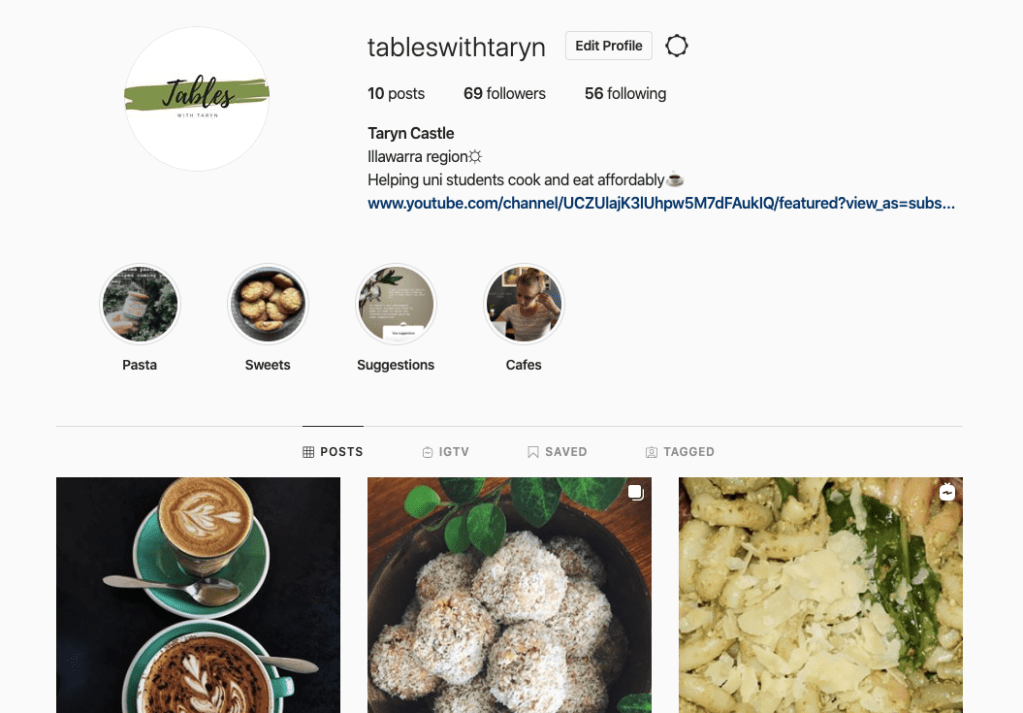
Heya! I’m Taryn and this is my Digital artefact for 2020. As apart of this digital artefact I will be finding the very best places to eat, and recipes to cook at home on a budget and study as uni students. I will be posting regularly on this Instagram page about the cafes I find, pricing, my experience studying and the accessibility of each of the places I visit, as well as posting blogs/vlogs about my experience and my thoughts.
Back in 1979 in his book ‘The Selfish Gene’ an evolutionary biologist and author named Richard Dawkins coined the idea of a ‘meme’. However, it’s not what you would think it is. A ‘meme’ isn’t just an image with a funny caption made to make us laugh, but in reality is actually more complex…. they’re everywhere.
A ‘meme‘ can actually be defined by google as “an element of a culture or system of behaviour passed from one individual to another by imitation or other non-genetic means”. To provide an example, this week I decided to record a cover of one of my favourite songs. It’s a little rusty and I hate singing to people but it provided the perfect example for this concept of a ‘meme’.
Music is considered as ‘distributed media‘ because when a piece of music is made it is distributed to thousands of people where it can be imitated, mutated and replicated. It has influenced the creation of thousands of communities all around the world that come together to share, inspire, embrace and imitate music.
The lyrics in songs can create a universe idea, that connects with individuals or groups. I personally find I connect to songs better when I can relate to the lyrics or they provoke emotion.
MEMETIC WARFARE:
Meme warfare is the use of meme as a form of propoganda. The use of memes have become a popular way for people to promote causes, businesses or a particular opinion. For instance, throughout the climate change debate Greta Thunberg, a 17 year old who has become an activist towards the arising issue of climate change, is constantly used as a meme to portray a point or ‘a side’. It is used as a ‘weapon’ to imitate and replicate significant ideas.
For this weeks group task we were given this question to answer:
Political advertising laws came into question during the 2018 Australian election. Provide two examples of contested advertising and explain why they were controversial., and why they may or may not have been within the boundaries of the law.
As a group we struggled with this question… 1. because it was 8:30 in the morning and 2. because it’s a difficult question to research. The first example we found linked to this question perfectly (with the help from lovely Jodie), was Gladys Liu, a member of the liberal party. Back in 2018, Gladys Liu was accused and contested by a labour member, to have handed out how-to-vote cards specifically stating how to vote for the liberal candidate.
“The right way to vote on the green ballot paper – fill in 1 next to the candidate of the Liberal Party and fill in the numbers from smallest to largest in the rest of the boxes,”
A liberal candidate admitted that the posters written in Chinese language were made to look like a message from the Australian Electoral Commission, and were written in the same colours, making it confusing for voters. The signs were supposedly checked by Liberal party member Simon Frost, however, he stated some of the language used on the signs did not match up with what he originally approved. Although controversial, her actions were justified with even Scott Morrison showing his support for her case.
Prime Minister Scott Morrison has given Liu his strongest support and declared criticism of her election and behaviour is unwarranted.
The second example we struggled with the most because we couldn’t find who contested or whether in fact this election scheme was contested at all. However, we did find that Clive Palmers $60 million advertising spending was not taken lightly and was questioned by the media and parliament. Not only did Clive Palmer spend 60 million dollars on advertising, spending more money on advertising than Toyota and McDonalds, to not even get a seat, but he also supposedly payed volunteers $27 an hour to hand out how to vote cards on election day. This added up to roughly $1500 per vote where he would receive only $2.75 per vote back from the AEC, according to ‘THE GUARDIAN’.
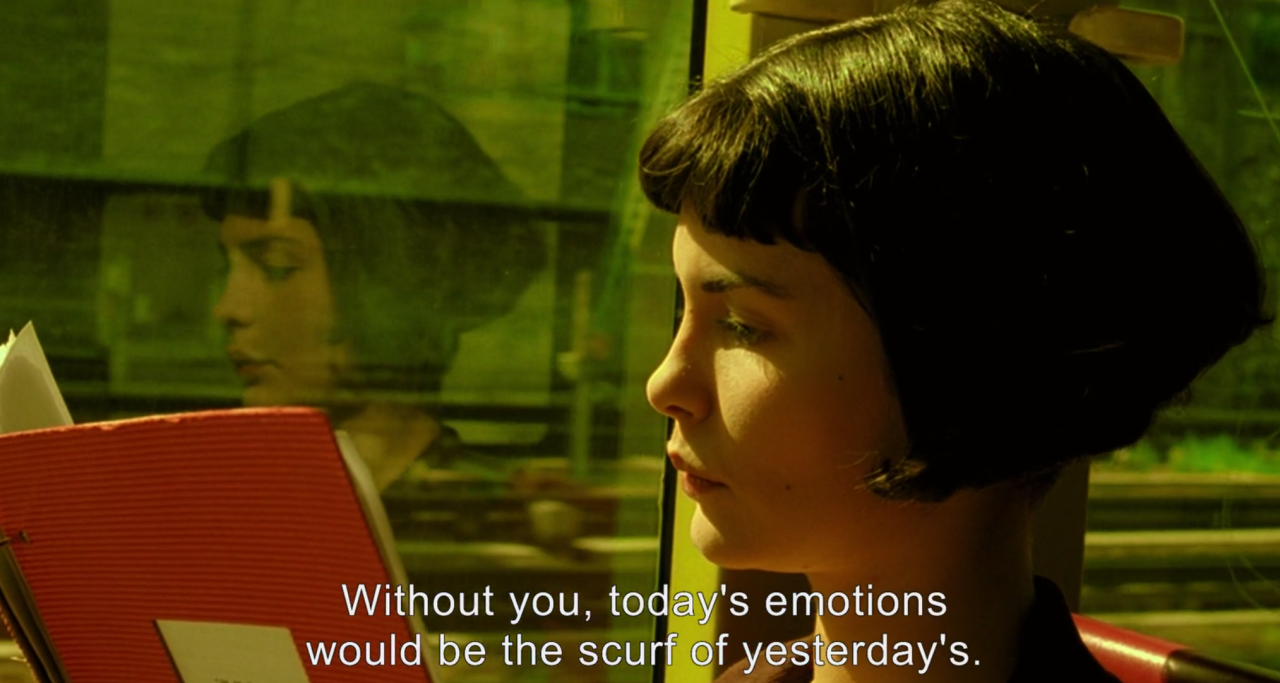
When I first watched this short clip from ‘Amélie’, I was instantly drawn to the music playing in the background. It was clear that the emotions of both characters could be determined without dialogue, but purely from the softness, tempo and beat of the music as it shifted from shot to shot.
In the beginning there is no music. Just the sounds of life around this one individual. The ambient sounds of a phone ringing, chatter of people, a water fountain, a bell dinging in the distant background, all create an eery, and suspenseful atmosphere as he makes his way to where the phone rings excessively.
Then the music begins to play. From the first few seconds the emotion of sadness, wonder and curiosity sets it from the slow and soft tempo played. As he reminisces, the musics beat picks up into a happier and more joyful tone, the pitch is soft and the tempo is fast. You’re reminded of his childhood. As the scene carries on, the music gets slower, changing the feeling from happy to sad. The lighting technique of warm colours during the bar scene, creates the feeling of a happy atmosphere while the music contradicts this feeling, creating a sad atmosphere of a father who wishes to see his family.
I believe music is one of the most powerful Sound nomenclature‘s as it alone has the power to create and provoke any emotion it desires. The scene above demonstrates how a scene can look one way but feel another. Looking at the scene and the warm softness of it, you would believe it’s a happy scene, but the music allows for this scene to be portrayed differently and allow viewers to understand the characters emotions.
For this weeks exercise in BCM115 we were asked to find a spot, whether it be outside or inside, sit down and listen. We were asked to write down or record what we heard and analyse these noises, where they come from, their importance, how they make us feel.
My first spot I chose was my backyard. Being stuck at home, I’ve learnt that laying outside, even for a few minutes, can help me mentally and allows me to really think. I chose this spot for this exercise because I wanted to analyse why it is I feel so calm laying outside in my backyard. I took my recording at 1:30 in the afternoon.
Heres what I wrote down:
My dog shaking
Birds chirping as they fly past
A bird in the tree above me
Car door shutting
People talking in the distance
More birds
My dog in the pebbles
Cars driving further down the valley
Dog barking
When I play back the recording, I hear all these things, some even more vibrant than I remember. For my second recording I did the same thing. I sat in my backyard and pressed record, except this time I recorded later in the day at 3:20pm.
Heres what I heard:
Neighbours jumping on the trampoline
Construction down the road
The Tv playing from inside
A dog barking
My dog shaking (again)
Birds
Wind
Vaccum
My dog dropping her ball and crying for attention
These 2 recordings together helped me analyse the different noises I hear during the day. These aren’t foreign noises, and living where I do we hear everything within at least a 5km radius. So much goes on around me at all hours of the day and I never really stop to listen.
Here’s my Sound cloud edit:
To add onto this exercise I also made a recording when my family and I took a quick walk down puckeys boardwalk. However, due to trying to keep up with them, I only managed to capture 20 seconds, but I wish to include it in this blog because it captures one of my favourite sounds. I love the sound of waves and the many sounds that surround the beach. This particular recording took place as I was walking down a gravel footpath right next to the beach. I found this sound satisfying because the 2 main sounds were so different yet worked together beautifully. The crunching sound of the gravel and the calmness of the waves as they crashed beside me is a sound I’ve always admired.
I definitely surprised myself when I understood this weeks lecture that introduced us to monological and dialogical media. If I were given these words with no context, I would have no idea what they were talking about, so I decided for this weeks remediation to shamelessly create a TikTok that quickly identifies the two medias during life in quarantine.
Monological media can be described as a ‘one to many’ process. A form of media that broadcasts information to an audience without conversation or interaction, whilst dialogical media is conversation and dialogue based. I used Netflix and reddit as an example that adolescents at present use for entertainment, especially during this weird time at home. Netflix is an example of monological media as it it demonstrates this ‘one-to-many’ idea. We are an audience of many, being broadcasted information through one source, we cannot speak directly back to the source, we are just an audience. This is where Reddit is different as a dialogical media. Dialogical as I explained is a more conversation based process, where people can interact with each other, share ideas, stories, quirky things they have been up to during quarantine. It’s a ‘many-to-many’ process and can be an example for ‘collective intelligence’.
“Collective intelligence is a form of universally distributed intelligence, constantly enhances, coordinated in real time, and resulting in the effective mobilisation of skills”
Pierre Lévy
Collective intelligence is extremely important in this digital age as it’s the collaboration and coming together of people to discuss and curate content. It’s a sociological concept that allows users of media around the world to curate content collectively, allowing us, as an audience, to both engage and participate with this content, whether it be through watching, commenting or providing our opinion. We wouldn’t have the media we have today without this idea of ‘collective intelligence’.
For this week’s task we were broken into groups, and given a case to analyse. We split the Google vs Vicaom case into 5 sections, breaking it down and coming together to analyse.
What was the lawsuit about?
In March 2007, Media enterprise Viacom initiated legal proceedings and sued YouTube and Google, claiming that YouTube had breached copyright laws and that they should be held accountable for the copyright infringements committed by YouTube users. The lawsuit sought after more than $1 billion in damages and followed Viacom’s initial demand of more than 100 000 takedown notices targeting videos allegedly owned by Viacom (which YouTube complied with). Shortly after the Viacom lawsuit, a number of class actions were also filed on behalf of sports leagues, music publishers and other copyright owners against YouTube all based on the same theory.
In what ways did the different appeal stages of the case change the outcome?
Due to a number of appeals undertaken by Viacom, their evidence supporting their case came to be seen as largely irrelevant as many of their arguments sought to undermine the Digital Millennium Copyright Act (DMCA).
One such example is when their appeal to the Second Circuit Court of Appeals suggested that YouTube “induced” infringement, therefore losing their protection under the Act. Viacom’s lack of evidence, as well as their stringent belief that the YouTube they are fighting against is the one of 2008, with no content filtering, led to yet another loss against YouTube.
This and a number of other appeals culminated in the removal of videos going against the Copyright Act, something YouTube already does.
What was the final outcome of the case?
After seven years, both companies declared to settle the case in 2014.This came after Judge Louis Stanton rejected the damages claims originally made by Viacom, concluding youtube didn’t have to monitor its website for infringing videos, it was up to the copyright owners to notify and demand youtube to remove videos that act against the Copyright Act. In a joint statement both companies declared “This settlement reflects the growing collaborative dialogue between our two companies on important opportunities, and we look forward to working more closely together”.
How does YouTube deal with copyright matter?
YouTube uses multiple forms of dealing with copyright and explains punishments which can occur such as being sued due to copyright. The most common action YouTube takes is using ‘copyright strikes’ on YouTube channels. For example, if you upload a piece of content which you did not make your video will be removed from your YouTube channel and will leave you with a copyright strike on your channel. YouTube works on a three strikes basis for ‘copyright strikes’ if you have received three of these strikes your channel will be deleted from YouTube. As well as this YouTube provides content creators with tools to control who can use their content
How do you define fair use?
As stated in the ALRC fair use is a defence against copyright infringement and asks whether something is ‘fair’. Fair use is different for each situation as there is no true definition for what it means to be ‘fair’ as each case is different.
Overtime the digital age has changed the way content is produced and the quantity of its production. Mass production in the industrial paradigm can be shown through the assembly line in a manufacturing factory. Nothing can be altered or changed… no risks can be taken. Emergent media has since changed this idea, allowing millions of creators to produce their own content, express themselves, take risks and to create their own aesthetic. Emergent media and the internet paradigm have allowed people to create craftsmanship allowing modification.
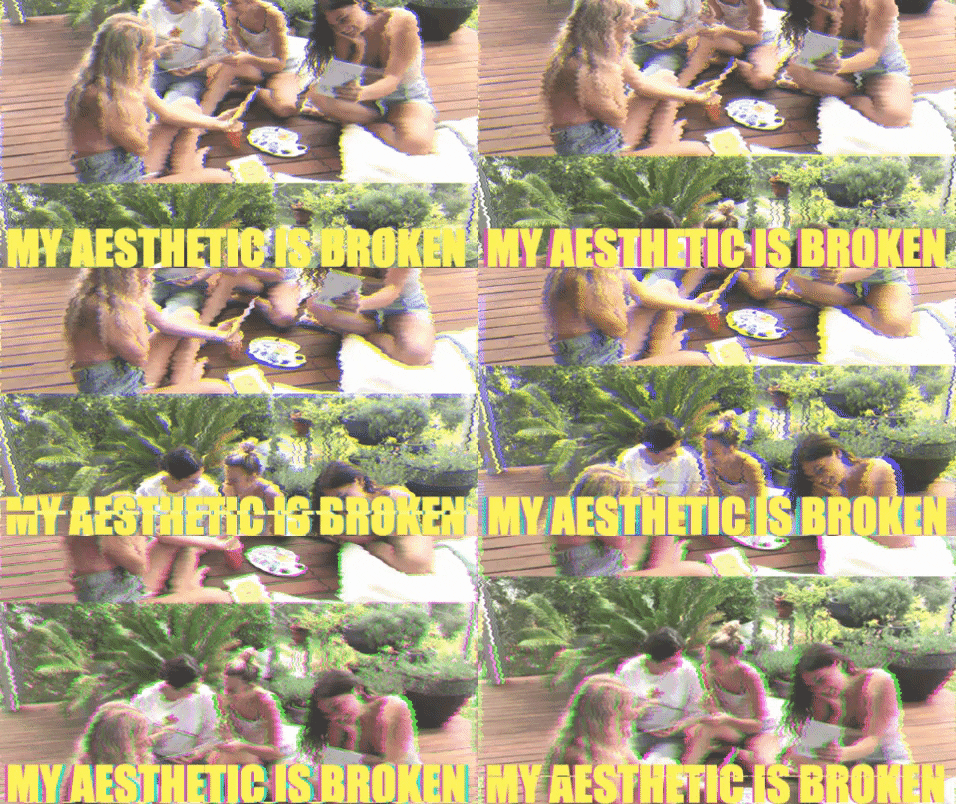
Within this internet paradigm, there are no boundaries, content flows freely. Following the idea of internet aesthetics and the internet being a ‘copy machine’ by Kevin Kelly, I created a gif demonstrating a glitch in technology. In this digital age technology can be difficult and can mean on accident we can freely alter content. In fact, glitches in technology, broken images have become a way people are producing content. With growing technology and the availability of hundred of platforms on the internet, we are able to use Kevin Kelly’s idea of the ‘copy machine’ to utilise what we have, or what we already see online and create content. So much so, that the glitch aesthetic has become a huge trend on social media. This open process is called “eternal beta”, reiterating that the internet paradigm and emergent media has no boundaries, as long as there is consumers.
Overtime production has taken a big leap from legacy media, where mass production meant a higher risk of failure with a high product cost, to a process with the lower risk of failure and a low cost process, what we now call emergent media.
The concept behind my remoscope is what I define as “where I’m from”. Instead of representing a place, I decided to take these words and turn it into a state of mind. When I try to define where I’m from, I think of my friends and family, the earth, the little moments that have made me the happiest. It’s times like waking up at 5am in darkness, sitting on the beach with my friends as we watch the sunrise, or kicking a football in our backyard with my family, that I truly understand the meaning of home. My home is where they are, it’s a mixture of these little moments of pure happiness.




 T's Timeline