BCM115

BCM115 Sound glossary:

Foley

Foley is a sound technique genuinely used in film that involves creating artificial sounds for movies or tv shows. Foley artists create these sounds in a recording studio during post-production, in synchrony with the picture, to enhance the quality of the audio.

Soundscapes

Soundscapes can be defined as an “acoustic environment”. A soundscape is the combination of sounds that forms from an immersive environment including natural sounds of birds, wind, leaves. It is a composition of natural sounds to produce an acoustic version of the environment.

Field recording

Field recordings are similar to foley as they are sounds added to visuals after being filmed. Fields recordings take natural sounds instead of producing artificial sounds, and add them into the audio post production.

Sound nomenclatures:

  • PITCH: High-Low

“Pitch in music, position of a single sound in the complete range of sound. Sounds are higher or lower in pitch according to the frequency of vibration of the sound waves producing them” – Encyclopaedia Britannica

  • DYNAMICS: Loud-Soft

Dynamics refers to the volume of a sound or a note

  • DURATION: Long-Short

Refers to the length of of a sound

  • TEMPO: Fast-Slow

Tempo refers to the speed at which a piece of music is played

  • TEXTURE: Thick-Thin

Texture is how the melodic, rhythmic, and harmonic materials are combined in a composition

  • Static-Moving
  • Regular-Irregular
  • Gradual-Sudden Change

BCM115

Shot list

In this weeks tutorial we were given the task of compiling a glossary for the following  distinct lexicons:

XCU – Extreme close up

Filmmaking 101: Camera Shot Types | B&H Explora

CU – Close up

What is the Close-Up Shot? Examples of Camera Angle & Movement

MS – Medium shot, mid shot or waist shot

Types of Shots in a Film: Building a Shot List

WS/LS – Wide short or long shot

Shot types - extended | ACMI

XWS/ XLS – Extra wide shot or Extra long shot

The Wide Shot: Creative Examples of Camera Movements & Angles
BCM115

Analysing the art of sound

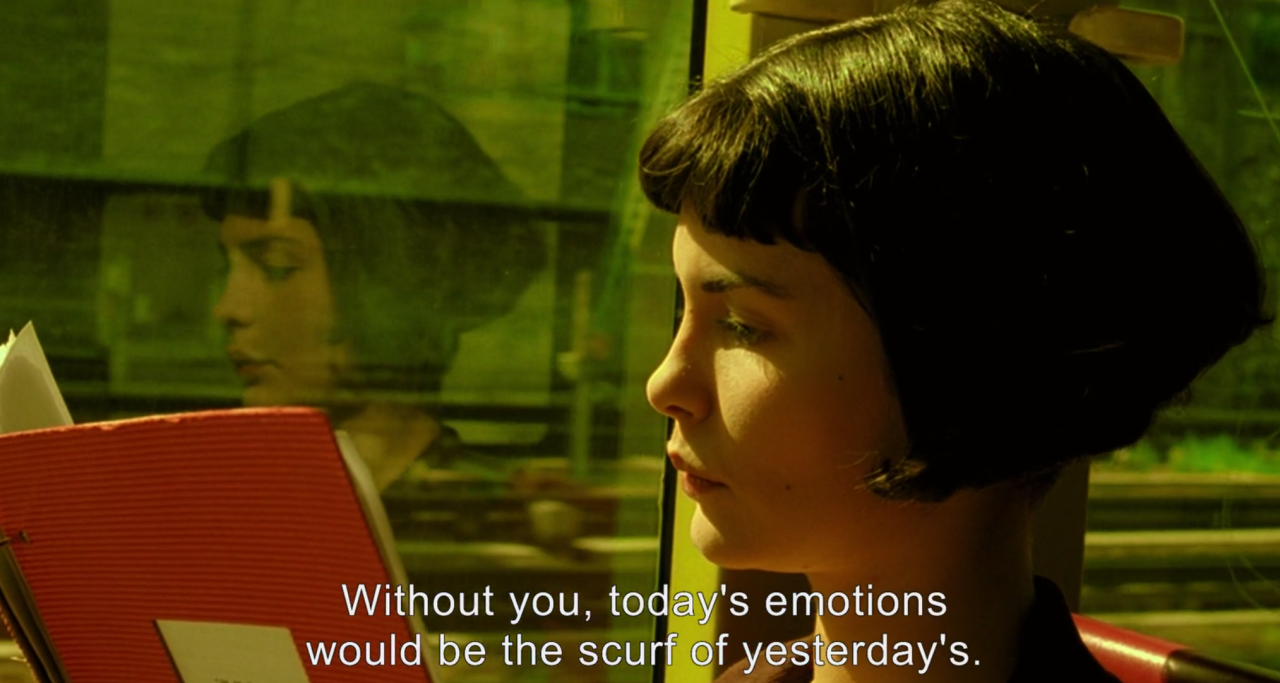
When I first watched this short clip from ‘Amélie’, I was instantly drawn to the music playing in the background. It was clear that the emotions of both characters could be determined without dialogue, but purely from the softness, tempo and beat of the music as it shifted from shot to shot.

In the beginning there is no music. Just the sounds of life around this one individual. The ambient sounds of a phone ringing, chatter of people, a water fountain, a bell dinging in the distant background, all create an eery, and suspenseful atmosphere as he makes his way to where the phone rings excessively.

Then the music begins to play. From the first few seconds the emotion of sadness, wonder and curiosity sets it from the slow and soft tempo played. As he reminisces, the musics beat picks up into a happier and more joyful tone, the pitch is soft and the tempo is fast. You’re reminded of his childhood. As the scene carries on, the music gets slower, changing the feeling from happy to sad. The lighting technique of warm colours during the bar scene, creates the feeling of a happy atmosphere while the music contradicts this feeling, creating a sad atmosphere of a father who wishes to see his family.

I believe music is one of the most powerful Sound nomenclature‘s as it alone has the power to create and provoke any emotion it desires. The scene above demonstrates how a scene can look one way but feel another. Looking at the scene and the warm softness of it, you would believe it’s a happy scene, but the music allows for this scene to be portrayed differently and allow viewers to understand the characters emotions.

film stills: Amélie
BCM115

Sound analysis

For this weeks exercise in BCM115 we were asked to find a spot, whether it be outside or inside, sit down and listen. We were asked to write down or record what we heard and analyse these noises, where they come from, their importance, how they make us feel.

My first spot I chose was my backyard. Being stuck at home, I’ve learnt that laying outside, even for a few minutes, can help me mentally and allows me to really think. I chose this spot for this exercise because I wanted to analyse why it is I feel so calm laying outside in my backyard. I took my recording at 1:30 in the afternoon.

Heres what I wrote down:

  1. My dog shaking
  2. Birds chirping as they fly past
  3. A bird in the tree above me
  4. Car door shutting
  5. People talking in the distance
  6. More birds
  7. My dog in the pebbles
  8. Cars driving further down the valley
  9. Dog barking

When I play back the recording, I hear all these things, some even more vibrant than I remember. For my second recording I did the same thing. I sat in my backyard and pressed record, except this time I recorded later in the day at 3:20pm.

Heres what I heard:

  1. Neighbours jumping on the trampoline
  2. Construction down the road
  3. The Tv playing from inside
  4. A dog barking
  5. My dog shaking (again)
  6. Birds
  7. Wind
  8. Vaccum
  9. My dog dropping her ball and crying for attention

These 2 recordings together helped me analyse the different noises I hear during the day. These aren’t foreign noises, and living where I do we hear everything within at least a 5km radius. So much goes on around me at all hours of the day and I never really stop to listen.

Here’s my Sound cloud edit:

To add onto this exercise I also made a recording when my family and I took a quick walk down puckeys boardwalk. However, due to trying to keep up with them, I only managed to capture 20 seconds, but I wish to include it in this blog because it captures one of my favourite sounds. I love the sound of waves and the many sounds that surround the beach. This particular recording took place as I was walking down a gravel footpath right next to the beach. I found this sound satisfying because the 2 main sounds were so different yet worked together beautifully. The crunching sound of the gravel and the calmness of the waves as they crashed beside me is a sound I’ve always admired.

BCM115

Where I’m from

The concept behind my remoscope is what I define as “where I’m from”. Instead of representing a place, I decided to take these words and turn it into a state of mind. When I try to define where I’m from, I think of my friends and family, the earth, the little moments that have made me the happiest. It’s times like waking up at 5am in darkness, sitting on the beach with my friends as we watch the sunrise, or kicking a football in our backyard with my family, that I truly understand the meaning of home. My home is where they are, it’s a mixture of these little moments of pure happiness.

BCM115

Remoscope

This week in our bcm115 tutorial we were given the task to film and create our very first remoscope. Nick, Hannah, and I decided to take off away from the campus and capture what we could find that differed from buildings, people and busy carparks.

The first mistake we made was forgetting to grab a tripod before we made it halfway down the street. But with this in mind, it was a great opportunity that we took on board to utilise the objects we had around us in order to create our still videos. This also allowed us to think outside the box, use different camera angles, and to be creative with what we were given.

We each took turns filming two videos for 30seconds, experimenting with the camera settings and lighting. In the end, when all the shots were edited together, it was evident we had created a story without sound, editing, effects… all within the 1 minute.

Our final product

The main goal for this tutorial was to learn how to use the professional cameras, experiment with the settings, and learning to use premiere pro as an editing tool. The two shots that I created was:

  • Low angle shot of Nick and Hannah
  • Hannah looking at her reflection

-T